The Land & the First House
1874Broadfield House sits on a corner of land that, in the nineteenth century, was simply called the Broadfield — a field at Stormer Hill on the edge of Tottington Lower End, just off the old turnpike road that climbs from Tottington up to Turton.
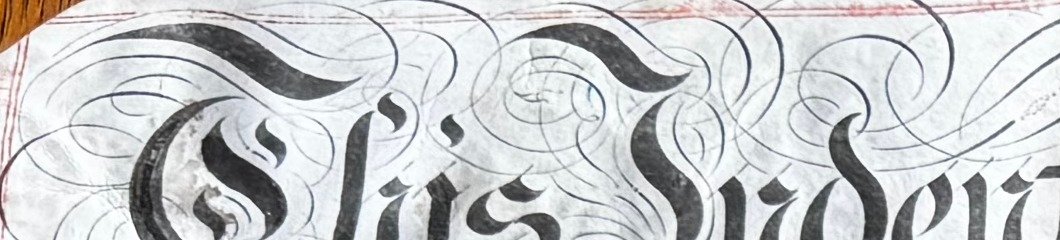
On Lady Day — 25 March 1874 — the freeholder Thomas Winter Potter, Esq., of East Court, Cheltenham, leased a 637-square-yard plot to a Tottington music teacher named Thomas Worsley. The lease ran for 999 years at a rent of £5 a year, and Worsley was bound to erect, build and completely finish a house on the land within twelve months. He did so on time. The new stone house went up alone on that plot — standing by itself in open country — and took its name from the field on which it stood: Broadfield House.
The Piano Man
1828–1896Thomas Worsley was no stranger to the Bury piano trade. By 1867, when he was thirty‑nine, he was already advertising "new and second-hand cottage pianofortes and harmoniums" from a shop at Newington, near Lower Croft, Elton — in the very township the Nabbs would come from a generation later. He moved up the hill to Tottington when he leased the Stormer Hill plot in 1874, and from Broadfield House ran a busy dealership for the next fifteen years.
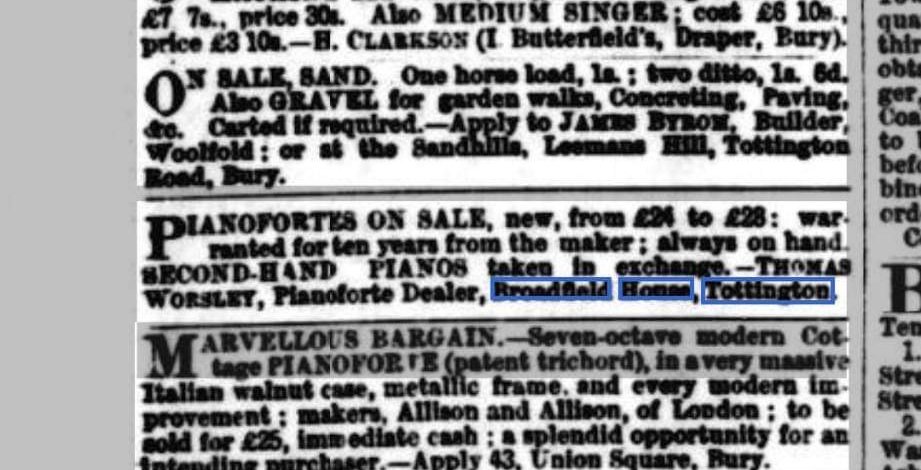
His regular adverts in the Bury Guardian and Bury Times offered new pianofortes for £24 to £28, "warranted for ten years from the maker," with second‑hand pianos taken in part‑exchange. The cuttings in the family papers are signed off simply: Thomas Worsley, Pianoforte Dealer, Broadfield House, Tottington.
He sold up to Joseph Nabb in November 1889 but stayed in the village; he died at home in Tottington in September 1896, aged sixty-eight, and was buried at Christ Church, Ainsworth — having never moved more than a mile from the house he had built.
The Nabbs Move In
1889In November 1889, Worsley sold up. The buyer was Joseph Nabb, a brass founder from Elton, just outside Bury — and, in time, a director of the Bury Brewery Company. He paid £475 for the house and took on what was left of the lease. Joseph, his wife Margaret, and their six children would make Broadfield House their family home for the next seventy years.
When Joseph died in July 1906 he left everything in trust for his children — Oswald, Mary Elizabeth, Gertrude, Helena, William Stanley and Sally — with Margaret looking after things in the meantime.
A Family in Flux
1906Joseph’s last years were not easy ones. He was diabetic, with an old shoulder injury that meant Margaret had been helping him dress for two years. On the evening of 14 July 1906 he came home, took tea and went up to bed; while she was helping him undress, he fell backwards onto the bedroom floor and cut the back of his head. Erysipelas set in within days, and he died on 20 July, aged sixty-one.
The District Coroner, S. F. Butcher, sat at the Tottington Liberal Club the following Saturday and returned a verdict of accidental death — though the Sunday papers, less kindly, billed the story as:
“Director’s Fatal Intemperance.” — The Sunday papers, July 1906
The years that followed were not easy ones either. Sally, the youngest daughter, moved out of Tottington altogether in April 1913, taking the train north to become Mrs Paterson of Balnagowan, Alva, in Clackmannanshire. Oswald, meanwhile, had borrowed against his share of the inheritance, fallen into trouble, and signed his interest over to a Mrs Hannah Mansergh; he died in early 1915 with no children of his own. Margaret followed in late 1916. By spring 1917 the five surviving brothers and sisters had clubbed together and bought Oswald’s share back for £150, putting the house firmly back in family hands.
The Two Sisters
1929–1961William Stanley Nabb died without leaving a will. At the end of 1929 his widow Gertrude Elizabeth, by then living in Southport, sold her share of the house to her two sisters‑in‑law — Mary Elizabeth and Gertrude Nabb — for £100. The two unmarried sisters made Broadfield House their home for the rest of their lives. Mary Elizabeth died there in September 1957 and Gertrude in October 1961, ending seventy years of the Nabb family at the house.
The Footes
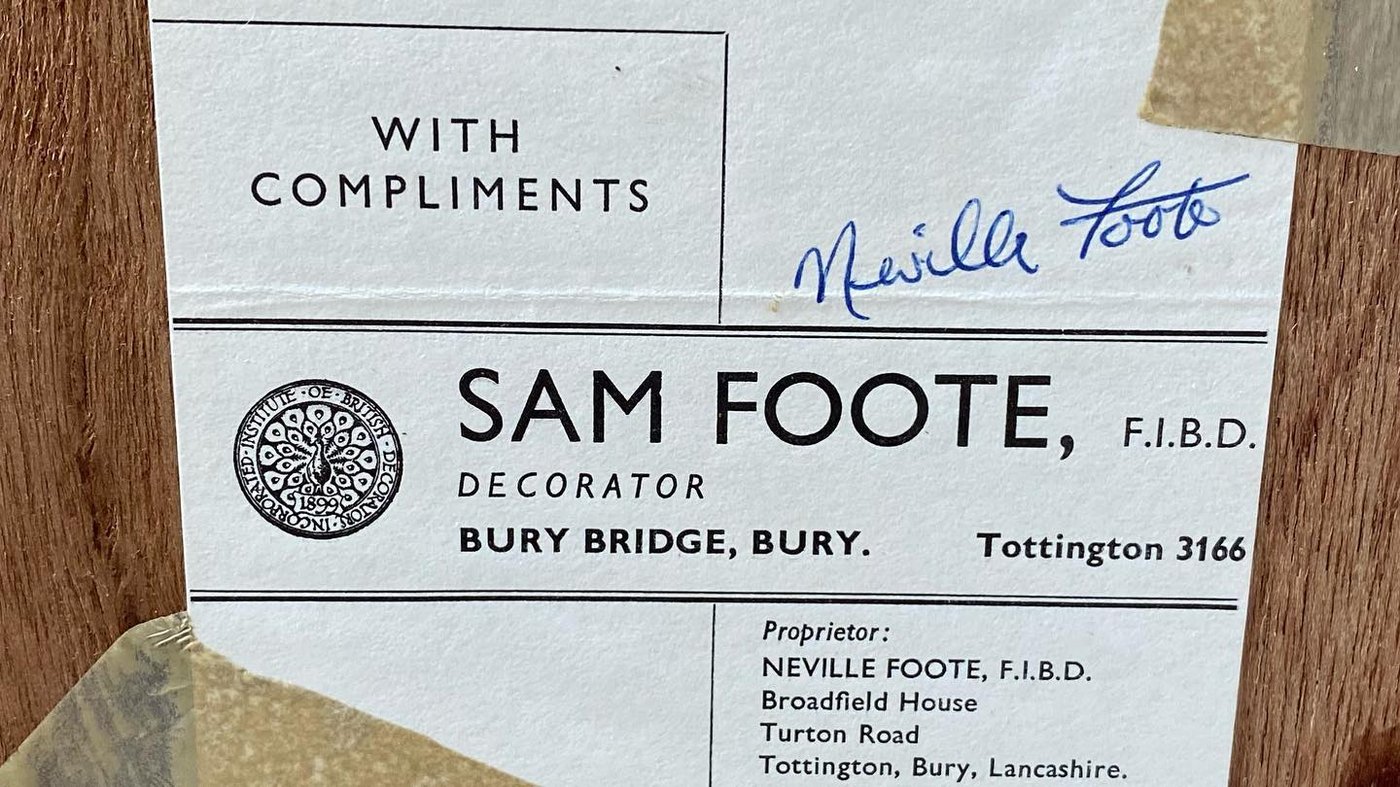
1962–2022In 1962, just months after Gertrude’s death, Broadfield House was sold by her executors — John Woodcock of Bury and John Daynes of Turton Road — to Neville Foote, “Master Painter and Decorator,” and his wife Elizabeth Robertson Thoms Foote (always known as Lena), who moved up the road from 98 Bury Road, Tottington. Neville ran his firm from Canal Wharf, Bury Bridge, and his trade adverts in the Bury Grammar School magazine The Clavian carried the line "Residence: Broadfield House, Turton Road, Tottington."
Behind the quiet Tottington address, however, lay an extraordinary war. As a young Lance Bombardier Signaller, Neville had landed on Juno Beach on D‑Day, 6 June 1944, in an advanced party setting up an artillery position. He fought on through Caen, Lisieux and Le Havre, helped liberate Antwerp and Brussels, took part in Operation Market‑Garden at Nijmegen, fought in the Battle of the Bulge, and crossed the Rhine in March 1945. On 14 April 1945 he was among the troops who liberated Bergen‑Belsen concentration camp. He came home without a scratch, and lived to be interviewed for the 75th anniversary of D‑Day at the age of ninety‑nine.
In September 1970 Neville bought a further plot of land at the rear of the house from Mrs K. M. Whitehead for £90, extending the garden to its present footprint — the conveyance handled by George Clough, Willis & Co., solicitors of 2 Manchester Road, Bury. It is very likely (though not yet confirmed) that Mrs Whitehead was a member of the Stormer Hill Whitehead family who, after a V1 doodlebug killed seven villagers on Chapel Street on Christmas Eve 1944, gave the village what is now Whitehead Gardens — the memorial plaque records the donation by “Mr & Mrs S. D. Whitehead of Stormer Hill.”
Their son Gordon Foote (1947–2017) grew up at Broadfield House and made his own quiet mark on the West Pennine Moors: he is remembered on a small memorial near the route as "co‑creator of The West Pennine Way."
The Gibsons & the Restoration
2022On 10 December 2022 Broadfield House was bought by Tony and Kirsten Gibson (née Rhodes), who would move into the house with their children Amalie Eve and Louis Anthony in August 2023. The intervening months were spent restoring a house that had quietly been waiting for them — covered, in places, by decades of more recent decoration that had crept over its original Victorian bones.
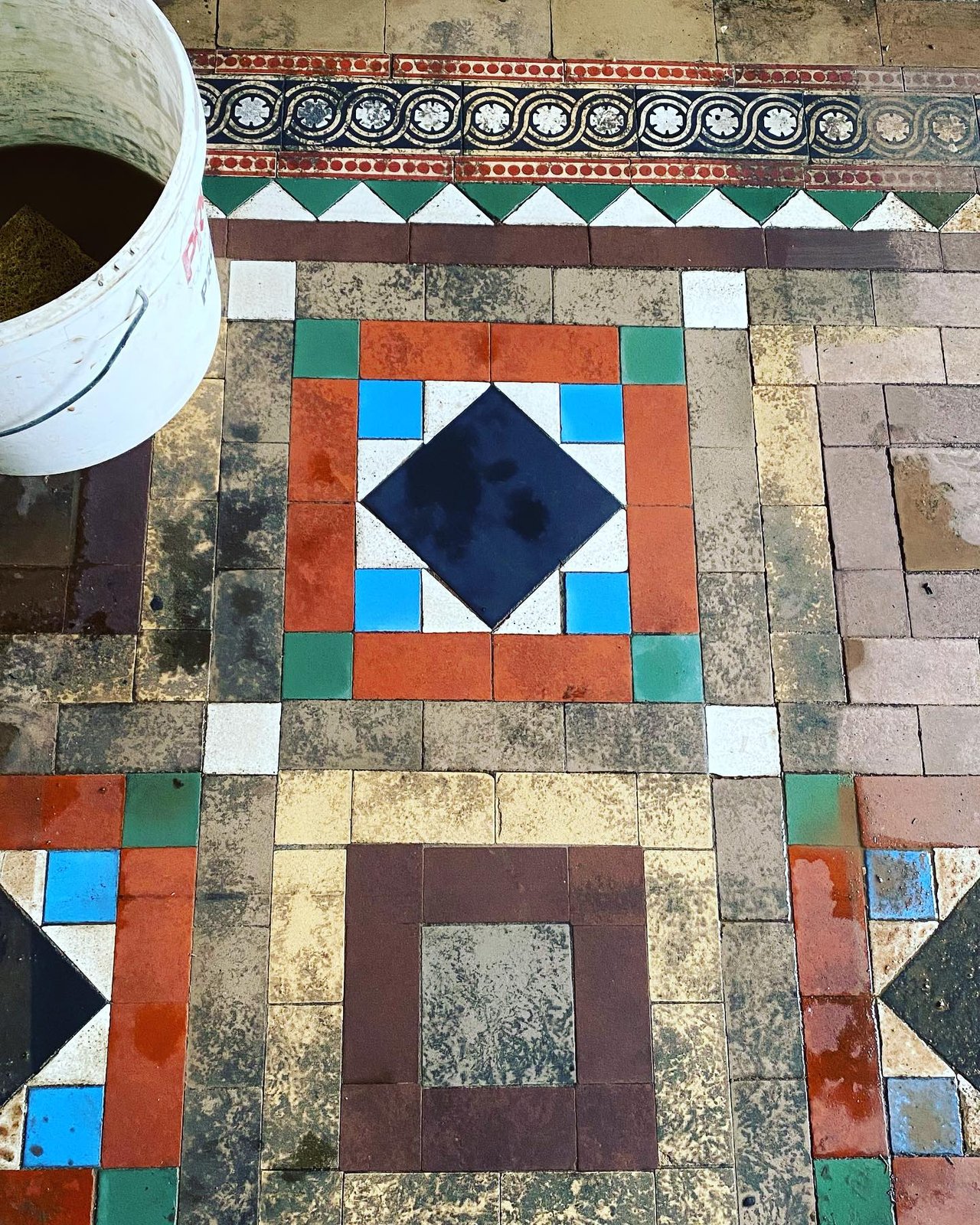
The Gibsons spent nine months patiently uncovering it. Lime plaster came down to reveal the names hidden inside the walls; years of laid carpet and lino were peeled back to reveal the original encaustic tiled hall floor in its full geometric glory; the panelled internal doors were stripped, repaired and rehung; a few original timber window shutters were rediscovered in the loft and used as the pattern for new ones, made and fitted to match; and original cornices, skirtings and chimneypieces were brought back to life.
One particularly fine find was a stretch of Lincrusta wallpaper — the pressed‑relief wallcovering patented by Frederick Walton in 1877 — panels of which have been carefully preserved and remain on display in the hallway. The restoration was documented week by week on Instagram at @broadfieldrenovation.
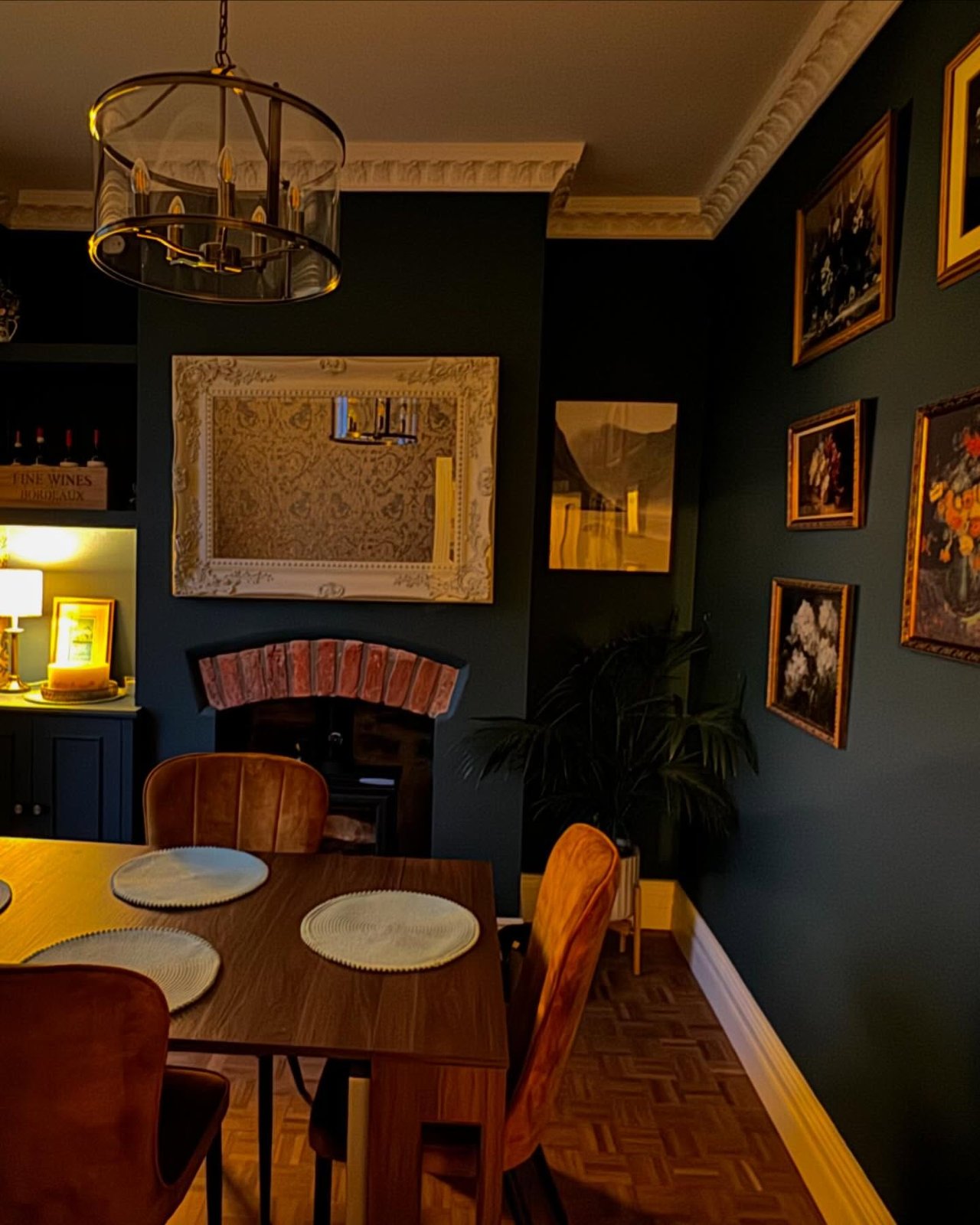
Their stewardship is the latest chapter in a story that began on a stretch of Lancashire turnpike land in the spring of 1874.
When the Gibsons stripped back the lime plaster during their 2022–23 restoration, they uncovered something the original Victorian builders had quietly tucked away — the signatures of two men who had been there at the very beginning.
William Warburton, Cabinet Maker
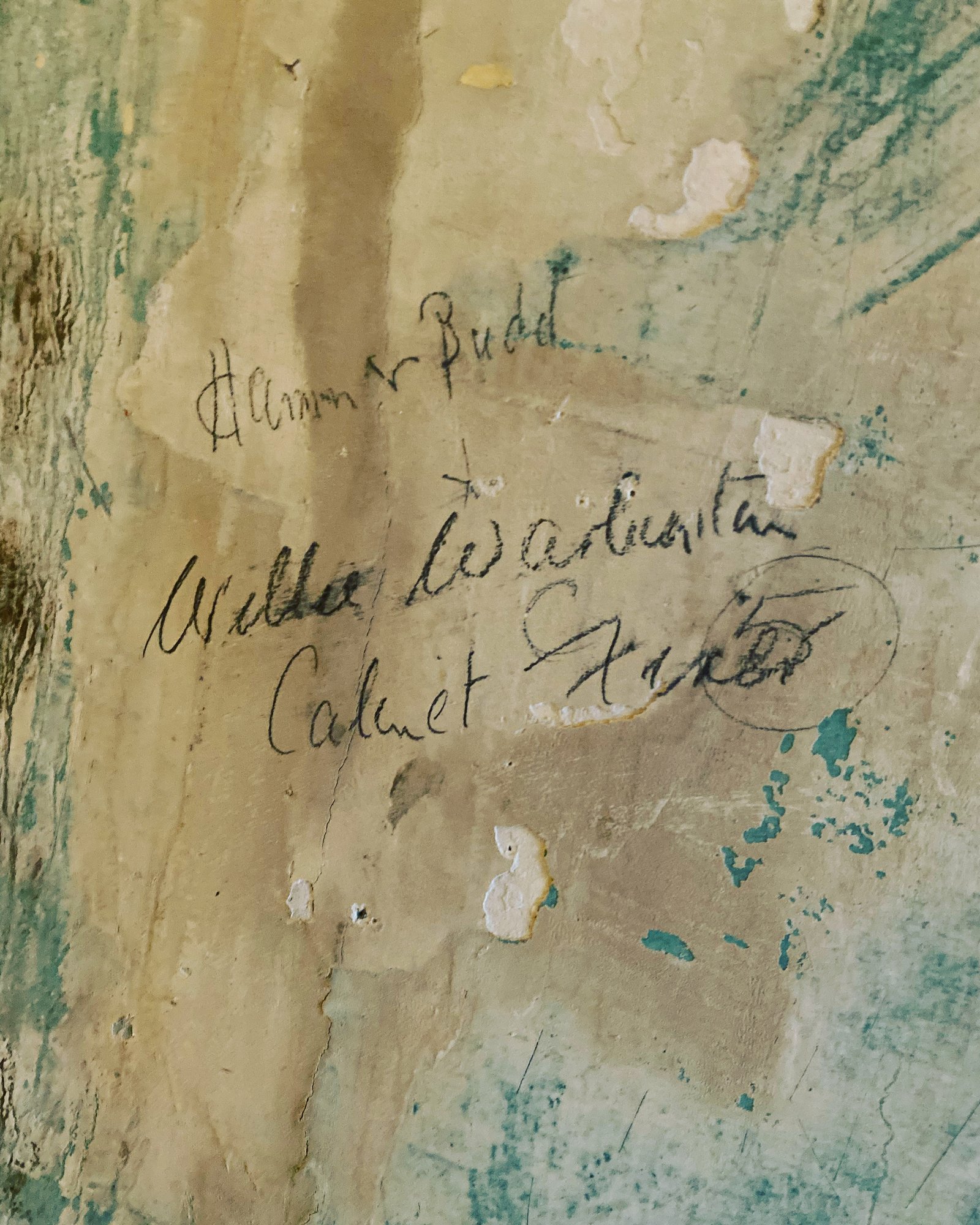
William Warburton, Cabinet Maker, signed his name on the wall in pencil, accompanied by a second name (“Hannor Budd” — very likely an apprentice or assistant) and a small inked flourish. It is, in effect, the maker’s mark of the man who almost certainly cut and hung the panelled internal doors and originally fitted the timber window shutters at Broadfield House.
Father Michael — A Moorman Priest
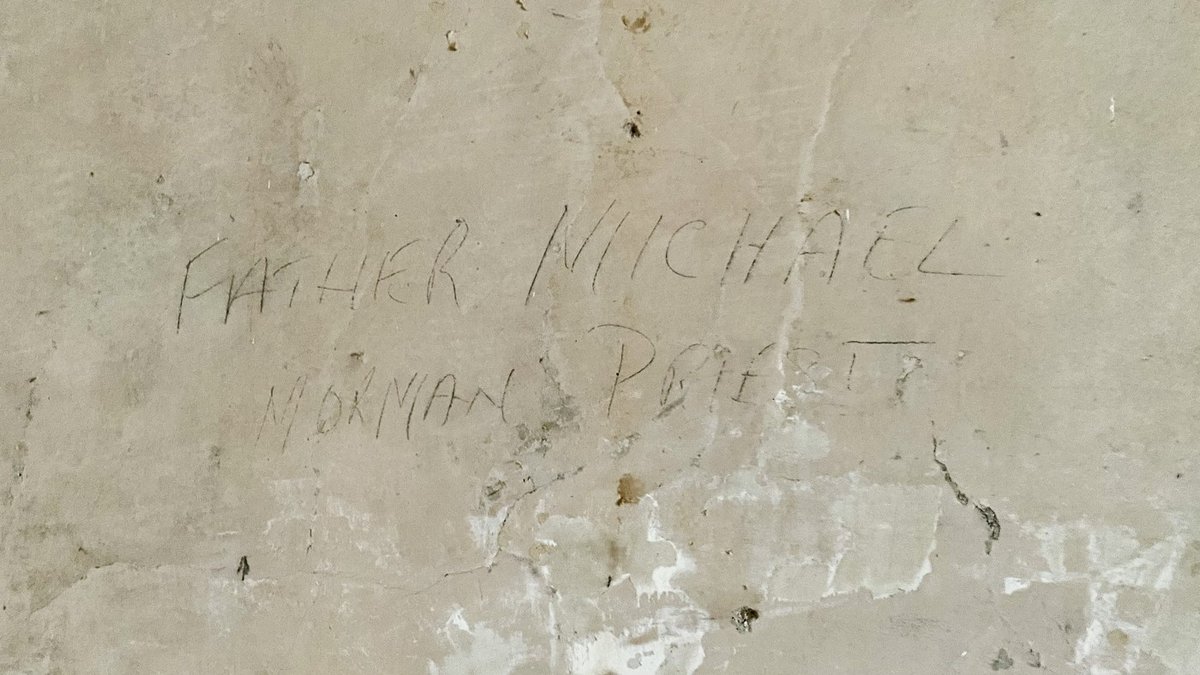
On a different stretch of plaster, in a careful hand of capitals, was a second inscription. It was a long‑standing Victorian custom for a priest to be invited to bless a newly‑built house, and for his name to be inscribed on the bare plaster before the walls were finished — a small spiritual cornerstone, hidden once the house was decorated. Father Michael’s inscription is the closest thing the building has to a foundation prayer, and it has now been re‑covered with the new plaster, sealed back inside the walls for the next set of owners to find.
From the Original Parchment
25 March 1874A few details from the original lease parchment — signed beside a red wax seal by Thomas Winter Potter — are worth pausing on. The full word‑for‑word transcript is here.
- Lessor not local. Potter is described as of East Court, Cheltenham, in the County of Gloucester — a southern gentleman holding a parcel of Lancashire turnpike land. The deed was witnessed by William Ackland, his butler, of Charlton Kings.
- Worsley’s designation on the deed: "of Stormer Hill, Tottington Lower End, in the County of Lancaster, Professor of Music."
- The plot — "a close of land called the Broadfield" in the Manor of Tottington, edged red on the plan: 28 × 25 × 23 × 25 yards = 637 superficial square yards, fronting the Tottington–Turton turnpike. Adjoining land to the NW belonged to Mr Samuel Heywood.
- 999 years at £5 a year, paid half‑yearly on Lady Day (25 March) and Michaelmas (29 September); the first payment fell at Michaelmas 1874.
- One year to build. Worsley was bound to erect, build and completely finish the house on or before 25 March 1875.
- Construction specs. Of good brick or stone, set in lime mortar, with oak or fir timber, covered with the best slates; frontage of at least fifteen feet, with at least nineteen feet elevation above the road; plans and elevations approved by the lessor.
- No alehouse, no extra openings. A double covenant: no sale of "wine, beer or spirituous liquors"; and no doors or windows on the NE or SE sides of any building — Potter retaining the right to build up to those boundaries.
- Mineral rights reserved — coal, limestone, lime, clay, sand and gravel, with right of access by the lessor’s agents and workmen, paying compensation for damage to the surface.
- Re-entry on arrears — thirty days’ default and the lease became void.

Sources & References
- Original deeds & abstract of title to Broadfield House — the indenture of lease of 25 March 1874 (Thomas Winter Potter to Thomas Worsley); the assignment of 15 November 1889 (Worsley to Joseph Nabb, brass founder of Elton, £475); the will of Joseph Nabb (proved Manchester District Probate Registry, 15 October 1906); subsequent settlements between the Nabb siblings 1909–1929; the deaths of Mary Elizabeth Nabb (18 September 1957) and Gertrude Nabb (8 October 1961) at Broadfield House.
- Assignment of leasehold premises known as Broadfield House, Turton Road, Tottington — John Woodcock and John Daynes (executors and trustees of the late Gertrude Nabb) to Mr Neville Foote, Master Painter and Decorator, and Mrs Elizabeth Robertson Thoms Foote, both of 98 Bury Road, Tottington. 1962. Hope & Co., Solicitors.
- Bill of costs — purchase of additional land at the rear of Broadfield House from Mrs K. M. Whitehead by Mr & Mrs N. Foote, consideration £90. George Clough, Willis & Co., Solicitors, 2 Manchester Road, Bury — account no. 5171, dated 18 September 1970.
- Trade advertisement. “Pianofortes on Sale, new, from £24 to £28: warranted for ten years from the maker; always on hand. Second-hand pianos taken in exchange. — Thomas Worsley, Pianoforte Dealer, Broadfield House, Tottington.” Bury Times, Saturday 24 July 1880, page 4 — British Newspaper Archive.
- Trade advertisement. Painter and Decorator, Works: Canal Wharf, Bury Bridge, Bury; Residence: Broadfield House, Turton Road, Tottington. Published in The Clavian, the magazine of Bury Grammar School, 1964.
- Neville Foote — D‑Day veteran’s account. Lance Bombardier Signaller, second-wave Juno Beach landing, 6 June 1944; through Caen, Lisieux, Le Havre, Antwerp, Brussels, Operation Market-Garden at Nijmegen, Battle of the Bulge, the Rhine crossing March 1945; among the troops who liberated Bergen‑Belsen on 14 April 1945. Originally published in The Sun, June 2019; archived by the Belsen Online Archive.
- Gordon Foote — co‑creator of The West Pennine Way. Memorial near the route, recorded at comewalkwithmeuk.co.uk ("Walks on the West Pennine Way").
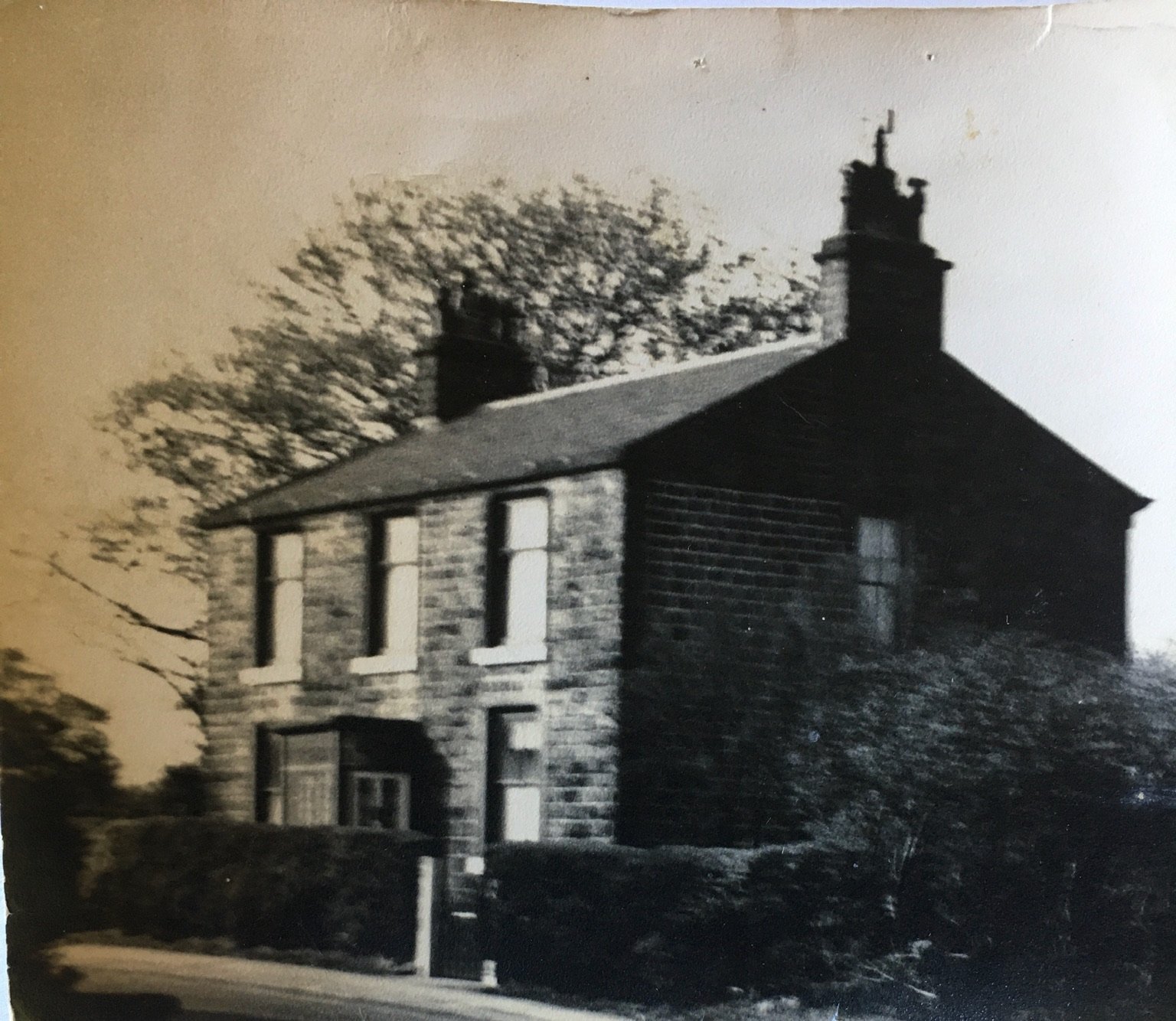
- Original photograph of Broadfield House, c. early 1900s — printed sepia photograph held with the family papers.
- Encaustic tiled hall floor — original Victorian floor uncovered during the Gibson restoration.
- Etched glass fanlight bearing “BROADFIELD HOUSE” — a new commission by the Gibsons (2023), set above what is now the rear door of the house, the principal entrance having been moved during the building’s history. The double medallion-and-rosette chain framing the lettering was copied from the tile floor.
- Inscriptions on the original lime plaster — signatures of William Warburton, Cabinet Maker and Father Michael, a Moorman Priest, uncovered by the Gibsons during the 2022–23 restoration.
- Lincrusta wallpaper. A run of original Victorian Lincrusta — a pressed-relief wallcovering patented by Frederick Walton in 1877 — was uncovered during the restoration. Several panels have been carefully preserved and remain on display in the hallway.
- Restoration record. The full nine-month restoration, including the discovery of the tile floor and the plaster signatures, was documented week by week by Tony Gibson on Instagram at @broadfieldrenovation.
Compiled by the Gibson family at Broadfield House, from the original deeds, abstracts of title and family records.